

Request an Appointment or call us
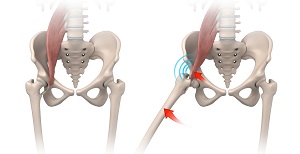
What is Iliopsoas Impingement?
Iliopsoas impingement also known as internal snapping hip syndrome is a condition characterized by inflammation and pain in the iliopsoas muscles resulting in abnormal movement of the hip.
What are the Causes of Iliopsoas Impingement?
Iliopsoas impingement is caused due to the tightening of the iliopsoas muscle in the hip and usually occurs due to repetitive flexion and overuse injuries of the hip joint.
What are the Symptoms of Iliopsoas Impingement?
Symptoms of iliopsoas impingement include:
- Hip pain
- Difficulty in walking
- Groin pain
- Popping sensation in the hip
- Tightening of the hip muscles
- Inflammation
- Muscle weakness
How is Iliopsoas Impingement Diagnosed?
Your doctor will review your medical history and symptoms and based on this a physical examination of the hip will be performed. Your doctor may also recommend the following diagnostic tests:
- X-rays: In this study, images of the bones are produced using high electromagnetic energy beams.
- MRI Scan: An imaging study that uses a large magnetic field and radio waves to detect any damage to the soft tissues.
- CT scan: Images of any damage in the hip are produced using special x-rays.
What is the Treatment for Iliopsoas Impingement?
Treatment options for iliopsoas impingement include:
Non-surgical Method
- Apply ice on the affected area to reduce inflammation.
- Avoid aggressive and repetitive hip movements.
- Your doctor will prescribe anti-inflammatory pain medications to relieve pain and inflammation.
Surgical Method
Surgery is usually recommended if non-surgical methods fail to improve the symptoms, this can include:
- Hip Arthroscopy: This is a minimally invasive procedure in which your doctor will insert a long thin flexible tube (arthroscope) with a camera at one end and other instruments through a small incision over the hip. This will help your doctor view the inside of your hip and treat damaged ligaments, tendons, or cartilage.
- Open Surgery: This technique helps your surgeon to gain better access by making a large incision over the hip to loosen the tight tendons of the hip joint.
For more information about our services Hip, Knee or to schedule an appointment, call us at or click here to request an appointment online. We’ll respond to you as soon as possible.