

Request an Appointment or call us
Introduction
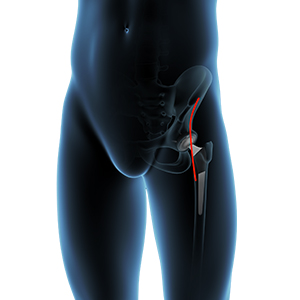
Dr. Reddy utilizes the direct anterior approach for total hip replacement to facilitate enhanced recovery through a muscle sparing approach that allows for a lower dislocation rate and no postoperative hip precautions. To find out more about hip arthritis and muscle sparing direct anterior total hip replacement, keep reading below.
What is Hip Arthritis?
Arthritis, also called osteoarthritis or degenerative joint disease, occurs when the smooth surface of the hip joint, called the cartilage, wears away. It occurs most often in the elderly. Sometimes it can occur due to rheumatologic disease, obesity, after trauma or from developmental issues during formation of the hip. Hip arthritis is a wear and tear disease where the smooth cartilage becomes damaged and worn out, causing pain, swelling, stiffness and restricted movement in the affected joint.
What are the Causes of Hip Arthritis?
Advanced age is one of the most common reasons for hip arthritis. You may also develop hip arthritis from a previous hip injury or fracture, obesity, developmental hip diseases, or avascular necrosis.
What are the Symptoms of Hip Arthritis?
Hip pain is often felt on the front of the hip in the groin area, and sometimes on the side or back of the hip. Occasionally people feel referred pain coming from the hip inside the knee. People often feel pain and stiffness that begins to interfere with their daily activities.
How is Hip Arthritis Diagnosed?
Based on your symptoms, we will obtain an X-ray and perform a physical examination of your hip. Sometimes we obtain an MRI as well.
How is Hip Arthritis Treated?
There are several treatment and lifestyle modifications that can help you ease your pain and symptoms:
- Medications: Pain-relieving medications such as Tylenol and NSAIDs like Advil, Aleve, Mobic or Celebrex may be prescribed to decrease inflammation and pain. Sometimes injections into the hip can help decrease inflammation and pain as well.
- Therapy: Physical therapy to strengthen your core and hip muscles and improve your flexibility can help decrease your pain and improve your function. Heat and/or cold therapy to the affected joint may also provide temporary relief.
- Weight Loss: Even a few pounds of weight loss can decrease the stress your worn away joint is feeling and decrease your pain.
- Surgery: When medication, therapy and weight loss fail to provide adequate relief and hip pain is affecting your ability to carry out normal activities, hip replacement surgery is considered a safe and effective option.
What is Direct Anterior Approach Hip Replacement Surgery?
Direct Anterior hip replacement is a minimally invasive technique for performing hip replacement surgery that does not involve cutting any muscles unlike more traditional approaches to hip replacement. Because there is less muscle damage, people often feel less pain and an easier early recovery period compared to traditional approaches to hip replacement. Additionally, there are no range of motion precautions after anterior total hip replacement and a lower dislocation rate compared to the posterior approach.
What are the Advantages of Anterior Hip Replacement?
- Minimal soft-tissue trauma
- Less post-operative pain
- Quicker recovery
- Early mobilization
- No post-operative restrictions
- Lower risk of dislocation
- Shorter hospital stay
What is the Procedure for Anterior Hip Replacement?
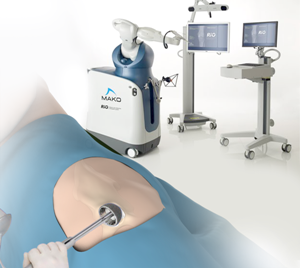
Anterior hip replacement surgery is either performed under general anesthesia or spinal anesthesia with sedation depending on the personalized plan your anesthesiologist will talk to you about. You will lie down on your back on a special operating table that enables your surgeon to perform the surgery. Your surgeon may use fluoroscopic (X-ray) imaging during the surgery or the Mako robotic arm during the surgery to ensure the accuracy of component positioning.
Your surgeon will make an incision about 3-4 inches in length on the front of the hip. The muscles are pushed aside (not cut) to gain access to the hip joint and perform your hip replacement. The worn away femoral head is separated from the acetabular socket and removed. The worn away acetabular surface is freshened with a special instrument called a reamer. The acetabular component is then impacted into place and sometimes screws are placed for additional stability. A new smooth liner is then placed into the acetabular component to recreate the smooth surface of your hip joint. The femur is then prepared with special instruments to allow a new femoral stem to be placed into the femoral canal which is either fixed with cement or allowed to let your own bone to grow onto it. A new smooth femoral head often made of ceramic is then placed on the femoral stem to recreate your new hip joint.
Once the new artificial components are fixed in place, the incision is closed in a layered fashion with all sutures buried under your skin and covered with a sterile dressing.
What are the Risks and Complications of Anterior Hip Replacement?
All surgeries carry an element of risk, whether it is related to the anesthesia or the procedure itself. Risks and complications with anterior hip replacement are rare, but can occur and may include:
- Infection at the incision site or joint space
- Fracture
- Nerve Damage
- DVT (blood clot)
- Leg length inequality
- Dislocation
What does Post Operative Care for Anterior Hip Replacement Involve?
After surgery you will be given specific instructions to be followed at home for a faster recovery. These include:
- No need for hip precautions due to the native stability of the anterior approach. However, avoid extremes of motion until your body has healed.
- Take medications as prescribed to relieve pain, decrease swelling and prevent infection.
- Participate in physical therapy to restore hip function and strength
- Eat a healthy diet and do not smoke to facilitate healing and faster recovery
What is Robotic Total Hip Replacement?
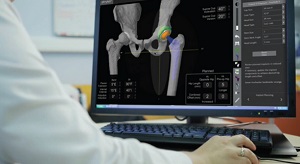
Robotic Total Hip Replacement is an additional tool your surgeon can use in the operative room to deliver additional accuracy to your hip replacement. This involves obtaining a pre-operative CT scan of your pelvis and leg which your surgeon uses to three-dimensionally plan your surgery. During surgery, your surgeon registers your pelvis with the CT scan and the Mako robotic arm allows your surgeon to help place the implants with additional accuracy. The benefits to robotic-assisted total hip replacement include improved component positioning and theoretically longer implant longevity.
For more information about our services Hip, Knee or to schedule an appointment, call us at or click here to request an appointment online. We’ll respond to you as soon as possible.